


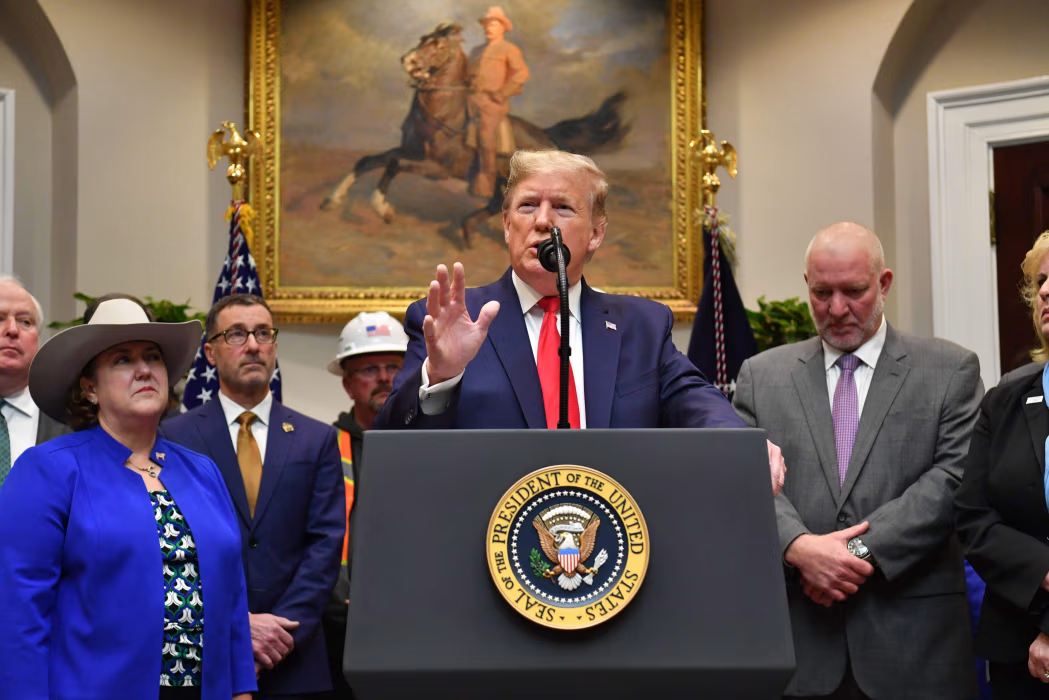
The White House has released updated guidance as part of ongoing U.S. environmental policy reform. The new rules focus on improving how federal agencies handle environmental reviews for infrastructure projects. The goal is to speed up approvals while keeping environmental protections in place.
Federal environmental reviews are required before many major construction projects can move forward. These include highways, energy facilities, and public infrastructure. The process ensures projects meet environmental standards and reduce harm to land, water, and air.
Under the updated U.S. environmental policy reform guidance, agencies are encouraged to simplify and coordinate review steps. Officials say this will reduce delays that often slow down important infrastructure work.
The White House says the changes are designed to make the process more efficient. At the same time, agencies must still follow environmental laws and maintain oversight. The aim is to balance faster development with responsible regulation.
Supporters of U.S. environmental policy reform say the changes could help modernize aging infrastructure more quickly. They argue that long review timelines can delay projects that are needed for transportation, energy, and public safety.
Business and construction groups have often raised concerns about lengthy approval processes. They say complex environmental reviews can increase costs and slow economic growth. The updated guidance is expected to address some of these concerns.
Environmental groups, however, are watching the changes closely. Some worry that faster approvals could reduce the depth of environmental analysis. They stress that strong oversight is needed to protect ecosystems and communities.
Government officials say the reform does not remove protections. Instead, it aims to improve coordination between agencies. This includes better communication and clearer timelines for project reviews.
U.S. environmental policy reform has long been a balancing act between development and protection. Past efforts have tried to reduce delays while still enforcing environmental laws. The new guidance continues this approach.
Infrastructure projects often involve multiple agencies at the federal, state, and local levels. This can create delays and overlapping reviews. The updated rules aim to reduce duplication and improve efficiency.
Experts say clearer review procedures could benefit both government and private developers. Faster decisions may allow projects to start sooner while still meeting legal requirements.
The White House also emphasizes transparency in the process. Agencies are expected to document decisions and ensure public access to environmental review information.
At the same time, public participation remains part of the process. Communities can still provide input on projects that may affect their environment or health.
U.S. environmental policy reform efforts like this are not new. Previous administrations have also attempted to streamline environmental review systems. The current changes build on earlier efforts to modernize infrastructure approval processes.
Policy analysts say the success of the reform will depend on implementation. If agencies apply the guidance consistently, it could reduce delays without weakening standards.
Construction timelines in the United States often depend on how quickly environmental reviews are completed. Any improvement in this process can have a significant impact on national infrastructure development.
The debate around U.S. environmental policy reform reflects a broader challenge in policymaking. Lawmakers and regulators must balance economic growth with environmental protection.
As infrastructure demand continues to grow, especially in transportation and energy sectors, pressure to improve approval systems is likely to increase.
The updated White House guidance signals continued effort to refine federal processes. While opinions differ on the impact, the reform highlights an ongoing push to make environmental review systems more efficient while maintaining core protections.
